
Social media attribution is useful when it makes a marketing decision clearer. It is unhelpful when it turns a partial record into a confident story about cause and effect. The difference matters because social activity often begins before a prospect is ready to identify themselves, while a meaningful commercial outcome may happen weeks or months later, through a sales conversation or another channel.
A practical approach starts by asking what the team needs to decide. Are you judging whether social is creating qualified demand, improving a conversion path, supporting an account already in market, or simply earning attention from the right audience? Each question needs a different view of the evidence. Trying to make one dashboard answer all of them is where attribution usually goes sideways.
Start with the business decision, not the platform report
Platform reporting is designed to describe activity inside a platform. That makes it useful for managing delivery, creative response, audience reach, frequency, and immediate conversions. It does not automatically describe the full journey that led to a sale. A reported conversion may follow an ad exposure, a search, a referral, a product conversation, and a visit from a different device. The platform can see only the portion it observed.
Before opening a report, write a one-sentence decision. For example: “Should we continue funding this audience program next quarter?” Then define the outcome that makes the answer meaningful. For an ecommerce business, it might be profitable new-customer revenue or repeat purchase quality. For a B2B team, it may be qualified pipeline, opportunity progression, or revenue from accounts that fit the sales team’s criteria.
Map the signals you can honestly observe
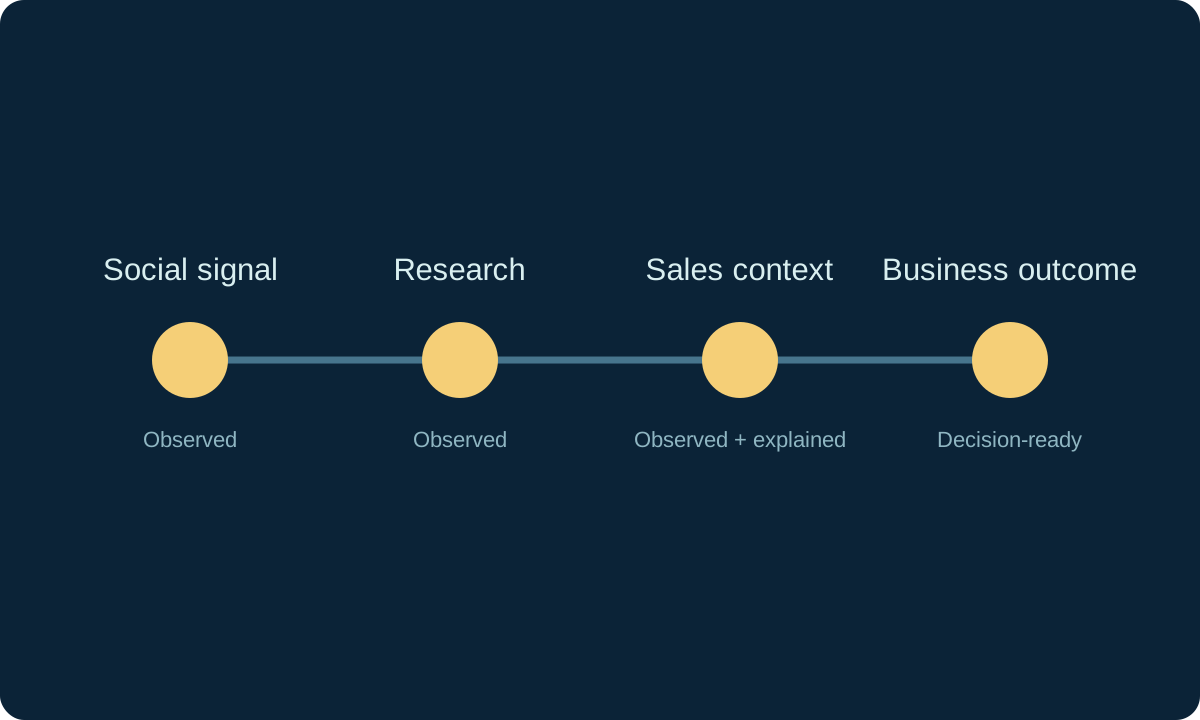
Social media attribution improves when the data model distinguishes observation from inference. An observed signal might include a paid social click, an organic post engagement, a video view, a website visit with campaign parameters, a form completion, or a known account’s later opportunity stage. An inference is a reasonable but unproven explanation, such as assuming the ad caused the opportunity because it appeared in the path.
That distinction protects the team from false certainty. A social interaction can be a useful clue even when it is not proof. If a particular message repeatedly appears before stronger site engagement or qualified conversations, it may deserve more testing. If a campaign produces plenty of inexpensive clicks but little useful progression, the pattern may point to the audience, offer, destination, or lead definition rather than the bid strategy alone.
Keep campaign naming, conversion definitions, and lifecycle stages stable enough to compare periods. If a qualification rule changes, record the change beside the trend. Otherwise a dashboard can make a reporting change look like a market change. Surge’s marketing measurement plan guide explains how to give each measure a clear job before it reaches the review meeting.
Use attribution models as lenses, not verdicts
First-touch attribution gives credit to the earliest recorded interaction. It can help a team understand how people first enter a journey, which is useful for demand creation and content discovery. Last-touch attribution credits the final recorded interaction. It can help diagnose which path immediately preceded a conversion, especially when improving a landing page or offer.
Multi-touch models distribute credit across recorded interactions. They can show patterns that a one-touch model hides, but the distribution is still a rule applied to incomplete data. Google’s attribution guidance notes that reporting models and lookback windows affect the credit shown. Label the model beside the report, describe the question it helps answer, and avoid treating the output as a universal score for a channel.
The right model depends on the decision. A short, direct-response program can reasonably focus on the conversion path. A longer B2B journey needs more patience: the person engaging with a social post may not be the person who requests a meeting, and the account may be influenced by a buying group. For that setting, the site’s B2B attribution guide offers a useful companion view.
Connect social activity to outcome quality
Attribution becomes more valuable when it moves beyond volume. A campaign can produce a high click-through rate and still attract the wrong people. A lead campaign can generate forms while sales rejects the majority. A prospecting effort can look expensive in a short window while creating the kind of demand that returns through search and direct visits later. The outcome has to reflect the actual commercial objective.
Build a simple hierarchy. Start with the business outcome, such as revenue, qualified pipeline, or margin. Add conversion-quality measures that explain whether people are progressing in the right way. Then add diagnostic signals, such as message response, audience mix, landing-page engagement, frequency, and creative fatigue. The diagnostic layer helps the team improve the work. It should not replace the outcome layer.
This is particularly important when paid social is one part of a broader plan. The paid media measurement guide describes how to connect delivery, customer value, attribution, and incremental impact. It helps prevent a familiar mistake: optimizing a channel for the easiest reported conversion instead of the result the business actually needs.
Respect the time it takes for a decision to happen
A social interaction may create awareness long before a prospect is ready to act. That is normal, not a tracking failure. Use evaluation windows that match the buying cycle, and compare cohorts at a similar age. A group that entered the funnel last week should not be judged against one that has had three months to become an opportunity.
Bring sales context into the review. Ask whether the accounts fit, what actually moved them forward, and where the marketing record is incomplete. The most credible answer may combine campaign data, web behavior, opportunity records, and a sales conversation. That is less tidy than a single platform metric, but it produces a decision the business can defend.
Use a controlled comparison when the stakes are high
Attribution can show association. It cannot always prove that a campaign caused an outcome. People who saw an ad may already have been more likely to buy. When the investment is consequential, create a fair comparison: a holdout audience, matched markets, a phased launch, or another design that asks what would have happened without the activity.
That does not mean every campaign needs a formal experiment. It means the strength of the evidence should match the cost of being wrong. Use attribution to diagnose, prioritize, and learn quickly. Use a stronger comparison when you are deciding whether to scale a material investment. Read the incrementality testing guide for a practical way to build that comparison.

Create a review that leads to a next move
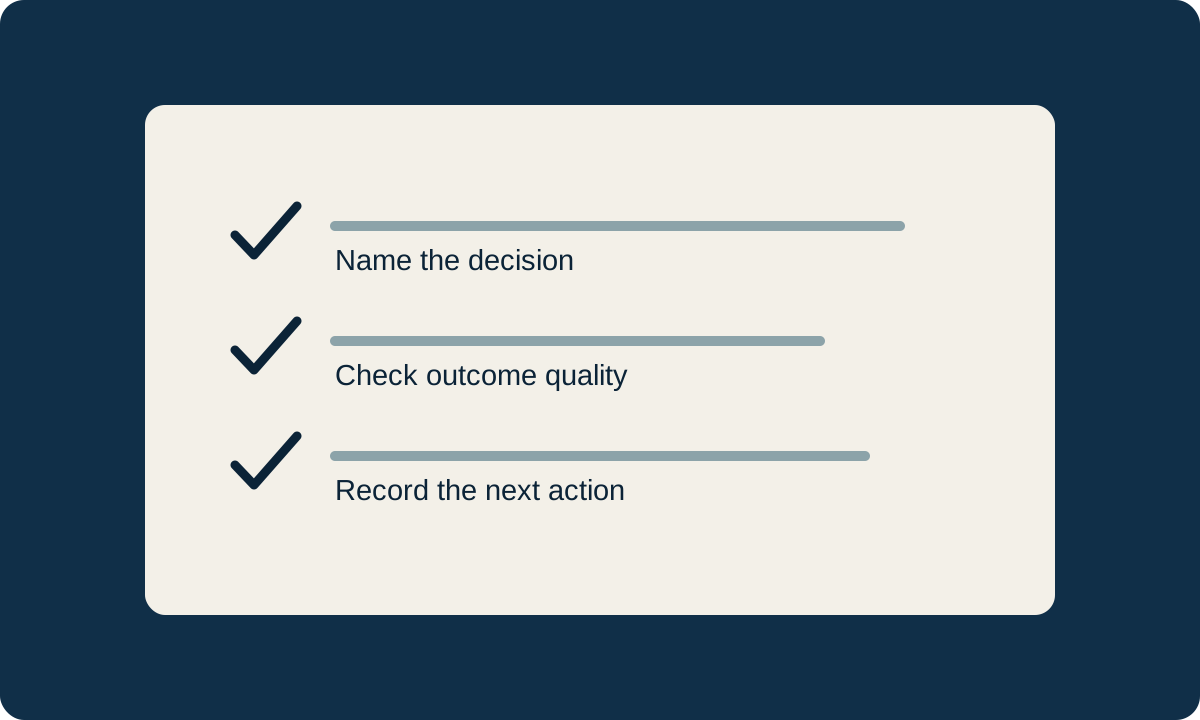
A useful social attribution review is short, consistent, and connected to action. Start with the decision. Read outcome quality first. Use attribution to explain the path and identify likely drivers. Add sales context and data-quality caveats. Then record one next move: scale, refine, test, maintain, or stop. “Keep monitoring” is not a decision.
Teams often gain more from a disciplined monthly review than from another reporting tool. Consistency makes patterns visible. It also exposes weak definitions, missing handoffs, and metrics that look busy but have no role in a decision. The goal is not to produce a perfect journey map. It is to make the next investment choice more credible.
Common social attribution mistakes to avoid
One common mistake is counting every reported conversion as a new customer created by social. Some people would have converted through another path, and some platform-reported results will overlap with other reporting systems. The practical response is not to discard the platform view. It is to compare it with site analytics, CRM outcomes, and the timing of the wider campaign before treating it as a financial result.
Another is overvaluing a single engagement signal. A video completion, reaction, click, or form fill can be useful, but no one activity carries the same meaning for every audience. Read the signal in context. Is it followed by deeper site engagement? Is the audience consistent with the intended customer? Does the sales team recognize the accounts or leads as viable? A metric earns authority when it helps answer one of those questions.
Teams also lose clarity when they mix organic and paid social results without stating the difference. Organic activity may help build familiarity, demonstrate expertise, and support community relationships. Paid activity may expand reach, test messages, or re-engage known visitors. Both can matter, but their jobs, costs, and measurement windows differ. Keep them distinguishable in the review, then consider how they work together in the full journey.
Set up the minimum reliable foundation
A useful foundation is smaller than most teams expect. Agree on campaign naming that identifies the channel, audience, message, and initiative. Use consistent tracking parameters on links. Define the conversion events that matter, and make sure the website, analytics, and sales systems use understandable labels for the same stages. Then decide who checks the data when a link, form, integration, or definition changes.
Documenting that foundation is not administrative busywork. It protects the meaning of the trend. When the team later sees a change in social-attributed activity, it can determine whether the market moved, the campaign changed, the offer shifted, or the measurement itself was altered. That makes the review faster and reduces the temptation to explain every number with a confident but unsupported story.
Finally, make room for qualitative feedback. Sales calls, customer interviews, creative comments, and reasons for rejection can reveal gaps that a dashboard cannot. They should not replace data, but they can make the data more interpretable. A prospect who says a social message made the problem feel urgent has supplied useful evidence, even when their path cannot be perfectly reconstructed.
Use this foundation as a working system rather than a one-time analytics project. Revisit the decision definitions when the offer, audience, sales motion, or customer economics change. Keep the historical meaning of earlier reports visible, then document the new rules before comparing future periods. The discipline sounds simple because it is. Its value comes from helping everyone in the room trust what a result means before they decide what to do next.
How Surge helps make social attribution useful
Surge connects media activity, customer behavior, and commercial outcomes into one operating view. Our marketing analytics consulting helps teams build reporting around decisions, not just data availability. Our paid media services connect channel planning, creative, audience strategy, and measurement so social activity has a clear role in the wider plan.
The work is designed to make uncertainty visible without making the team wait for perfect data. That means clearer definitions, better review habits, and stronger evidence when an investment deserves a closer look. Explore Surge’s case studies or talk with Surge about building a measurement approach your team can use with confidence.